
Essential Tips and Strategies to Launch Your Freelance Career
Freelancing offers the flexibility to work on your own terms, choose your projects, and increase your income. Whether you’re looking to escape the traditional 9-to-5 or seeking additional income, freelancing can be a rewarding career path. This blog post will guide you through the steps to get started and succeed as a freelancer.
Why Choose Freelancing?
- Flexibility: Work from anywhere and set your own schedule.
- Diverse Opportunities: Choose projects that match your skills and interests.
- Income Potential: Increase your earnings by taking on multiple clients.
- Skill Development: Enhance your skills and gain experience in various fields.
Steps to Get Started
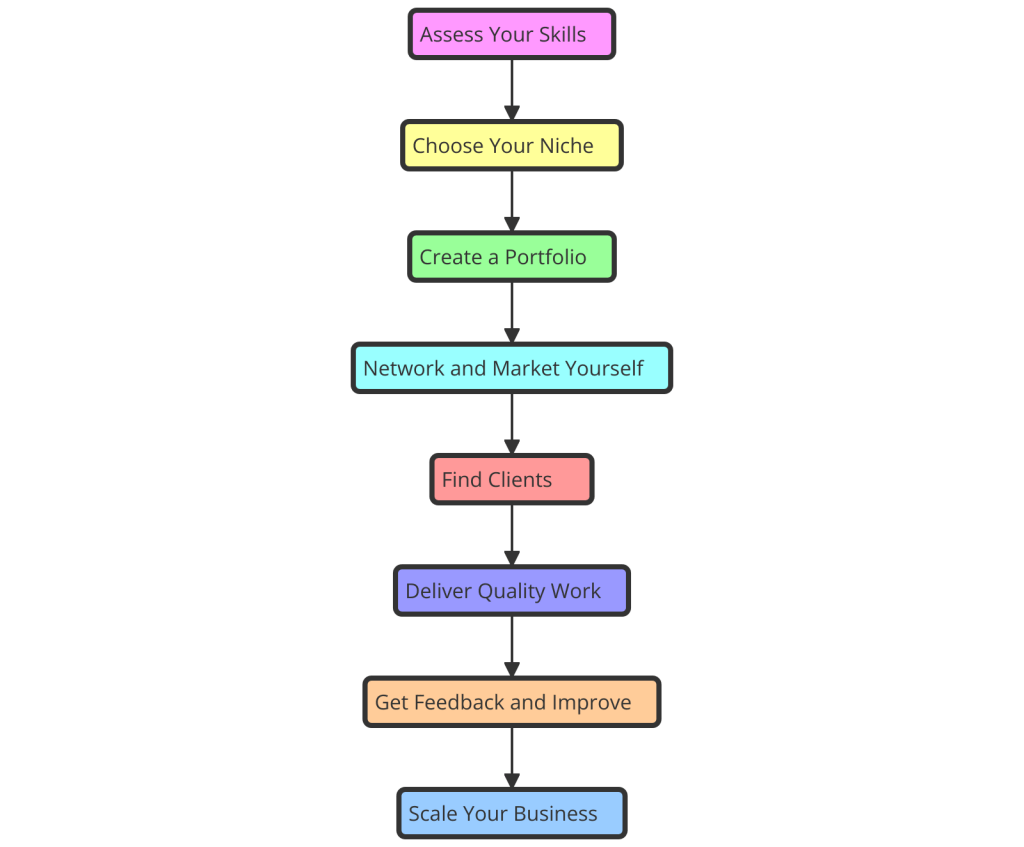
1. Identify Your Skills and Niche
Evaluate your skills and determine the services you can offer. Specializing in a niche can help you stand out in a competitive market. For example, if you excel in graphic design, consider focusing on logo design, branding, or digital illustration.
2. Build a Portfolio
Create a portfolio showcasing your best work. Use platforms like Behance, Dribbble, or your own website to display your projects and attract potential clients. Your portfolio should highlight your skills, style, and the quality of work you can deliver.
3. Set Up Profiles on Freelance Platforms
Join freelance platforms like Upwork, Fiverr, or Freelancer to connect with clients. Optimize your profile with a professional photo, detailed bio, and examples of your work. Be sure to update your profile regularly to reflect new skills or completed projects.
4. Establish Your Rates
Research market rates for your services and set competitive prices. Consider your experience, the complexity of the work, and your financial goals. It’s important to strike a balance between being affordable and valuing your expertise.
5. Network and Market Yourself
Promote your services on social media, attend networking events, and join online communities. Building a strong network can lead to referrals and repeat business. Use LinkedIn to connect with professionals in your industry and share updates about your freelance journey.
Finding Clients
1. Leverage Your Network
Reach out to friends, family, and professional contacts to spread the word about your freelancing services. Personal recommendations can be a powerful tool for finding new clients.
2. Utilize Job Boards
Regularly check job boards like Indeed, LinkedIn, and specialized freelance websites for new opportunities. Set up alerts for relevant job postings to stay informed about potential gigs.
3. Cold Pitching
Identify potential clients and send personalized pitches outlining how your services can benefit their business. Research each client to tailor your pitch and demonstrate your understanding of their needs.
“The only limit to your impact is your imagination and commitment.” – Tony Robbins
Managing Your Freelance Business
1. Time Management
Create a schedule that allows you to balance multiple projects and meet deadlines without burning out. Use tools like Trello or Asana to organize tasks and track progress.
2. Financial Management
Keep track of your income and expenses, set aside money for taxes, and consider using accounting software to manage your finances. Apps like QuickBooks or FreshBooks can simplify this process.
3. Contracts and Invoices
Use contracts to define the scope of work, payment terms, and deadlines. Send professional invoices to ensure timely payment. Clear contracts protect both you and your clients, minimizing misunderstandings.
Overcoming Challenges
1. Dealing with Uncertainty
Freelancing can be unpredictable. Build a financial cushion and diversify your client base to mitigate risks. Having multiple income streams can provide stability during slower periods.
2. Handling Rejection
Not every pitch will be successful. Learn from feedback and continue refining your approach. Persistence is key, and each rejection can offer valuable insights for improvement.
Real-Life Examples and Practical Tips
Turning Hobbies into Profitable Ventures
Learn how to transform your hobbies into income-generating activities by leveraging your skills and passions. This can provide a fulfilling way to boost your income while enjoying what you do. (Refer to our post on Turning Hobbies into Profitable Ventures)
Creating a Personal Brand: Stand Out in Your Career
Building a personal brand can significantly impact your freelance success. Establishing a strong online presence and showcasing your expertise can attract more clients. (Refer to our post on Creating a Personal Brand)
Career Change: How to Transition Smoothly
Discover practical tips and strategies for a smooth career change. Learn how to navigate the transition with confidence and ease, which is especially useful for those starting a freelance career. (Refer to our post on Career Change)
Conclusion
Starting a freelance career can be a fulfilling way to gain financial independence and flexibility. By following these steps and staying dedicated to your goals, you can build a successful freelance business. Remember, persistence and continuous learning are key to long-term success. Take advantage of available resources, and don’t be afraid to ask for help or mentorship. The freelance journey is unique and offers endless opportunities for growth and achievement.








 Escape the Race
Leave a reply to Enhance Interpersonal Skills: Mastering Emotional Intelligence – Escape the Race Cancel reply